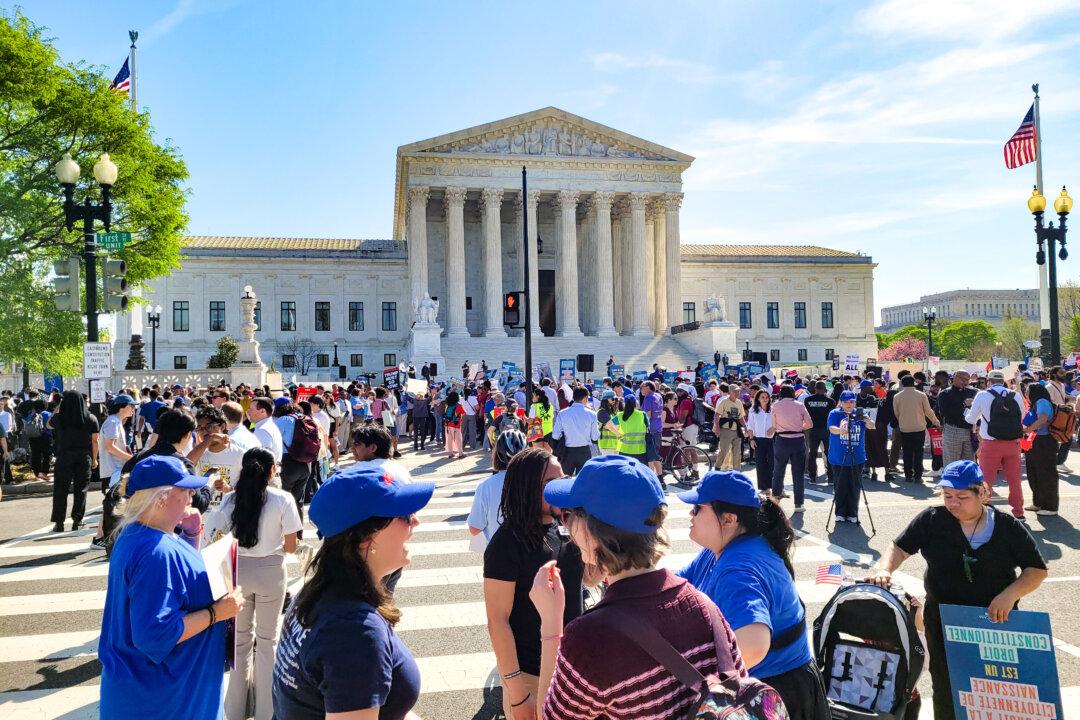
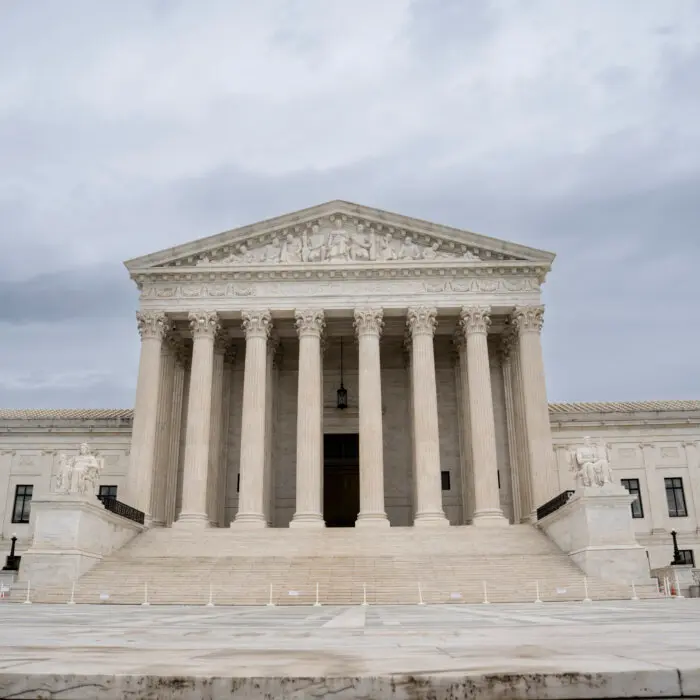
The Supreme Court on Aug. 11 scheduled oral arguments for November in three high-stakes cases involving a religious liberty challenge to Colorado’s preschool funding rules, a lawsuit over inadequate prison medical care, and a separation of powers dispute involving Labor Department penalties.
The court said in a new scheduling notice that on Nov. 3 it will hear St. Mary Catholic Parish v. Roy, which is about whether Colorado may decline to fund Catholic preschools.
Colorado’s universal preschool program pays for 15 hours of free preschool per week at public or private providers. To participate, preschools must offer “equal opportunity” to sign up regardless of religious affiliation, sexual orientation, gender identity, income level, or disability.
The state permits exemptions for other groups such as low-income or disabled children but has blocked Archdiocese of Denver preschools because they require families to support Catholic teachings on sex and gender.
The Supreme Court will look at the case in the light of two of its precedents, Employment Division v. Smith (1990), and Carson v. Makin (2022).
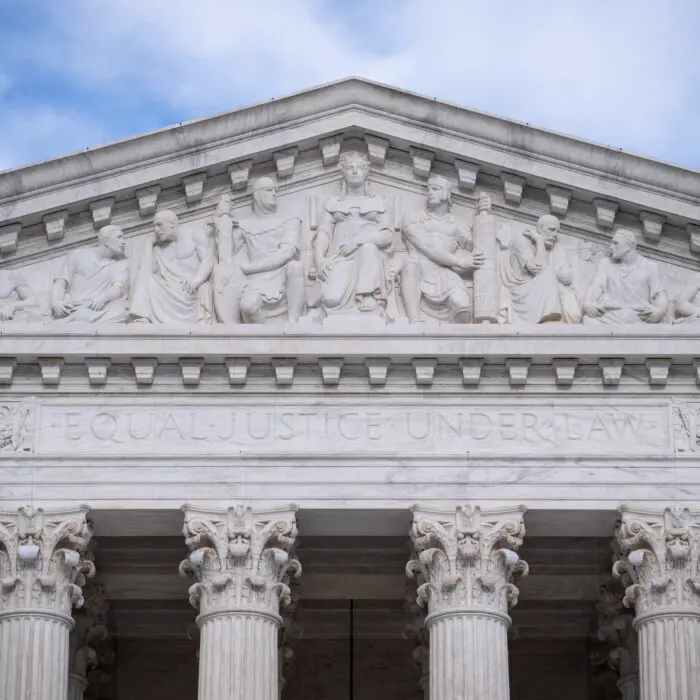
The petitioners had asked the Supreme Court to overrule Smith, but in agreeing to hear the case, it specifically declined to take up that question. Instead, the justices indicated that they will consider if the application of Smith should be narrowed.
In the case at hand, lower courts upheld the exclusion, citing Smith, holding that the rules were neutral and generally applicable. The justices limited review to two questions: how to apply Smith’s general applicability test when secular exemptions exist, and whether Carson requires stricter scrutiny only for explicit religious exclusions.
The high court said that it will hear U.S. Department of Labor v. Sun Valley Orchards LLC on Nov. 10. The case concerns whether the federal agency has authority to conduct its own administrative hearings to collect money from employers accused of violating the terms of the seasonal farm worker visa program.
In its ruling, the Third Circuit also cited Securities and Exchange Commission v. Jarkesy (2024), which held that the SEC’s in-house enforcement of securities fraud laws infringed the defendants’ Seventh Amendment right to a jury trial.
The case will give the Supreme Court another opportunity to address the reach of Jarkesy and decide how far federal agencies may go in handling enforcement cases that seek monetary penalties.
The justices indicated they will hear Nielsen v. Watanabe on Nov. 9, a case testing whether a federal inmate can sue prison staff for inadequate medical care under the Bivens doctrine.
The Supreme Court held in Bivens v. Six Unknown Federal Narcotics Agents (1971) that individuals may sue government officials for violations of their constitutional rights.
In Carlson v. Green (1980), the high court extended Bivens to an Eighth Amendment claim of deliberate indifference to medical needs where prison officials failed to deal with an inmate’s acute asthma attack and exacerbated it, leading to his death on-site within hours. The Eighth Amendment bans cruel and unusual punishment.
Since the 1980 ruling, the court has said it is up to Congress, not the courts, to create damages remedies.
Watanabe sued for $3 million under Bivens, alleging the prison authorities were deliberately indifferent to his serious medical needs and that this violated the Eighth Amendment.
A federal district court threw out the lawsuit, ruling it presented a “new context” different from Carlson. The court cited Watanabe’s access to the Bureau of Prisons’ administrative grievance process and the non-life-threatening nature of his injury. A divided U.S. Court of Appeals for the Ninth Circuit reversed, finding the claim closely tracked Carlson.
The Supreme Court is currently in recess for the summer. It will resume hearing oral arguments on the first Monday in October.