News analysis
Leadership transition in the Chinese regime is a messy affair. Party leaders who cannot align themselves with the stance of key founding revolutionaries and Communist Party elders—persons with oversized importance—soon find themselves replaced. Leaders with less forceful personalities or pedigree get subjugated.
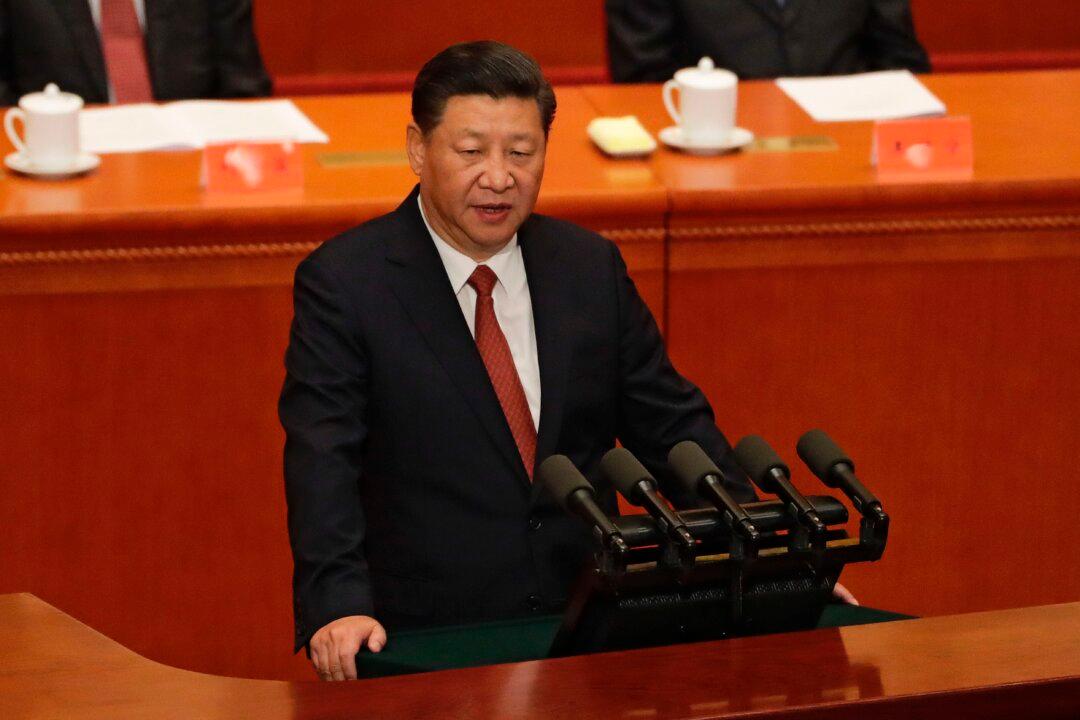
Xi Jinping, having spent his time in office battling with entrenched political interests, appears to be on the cusp of fully coming into his own as Party head.
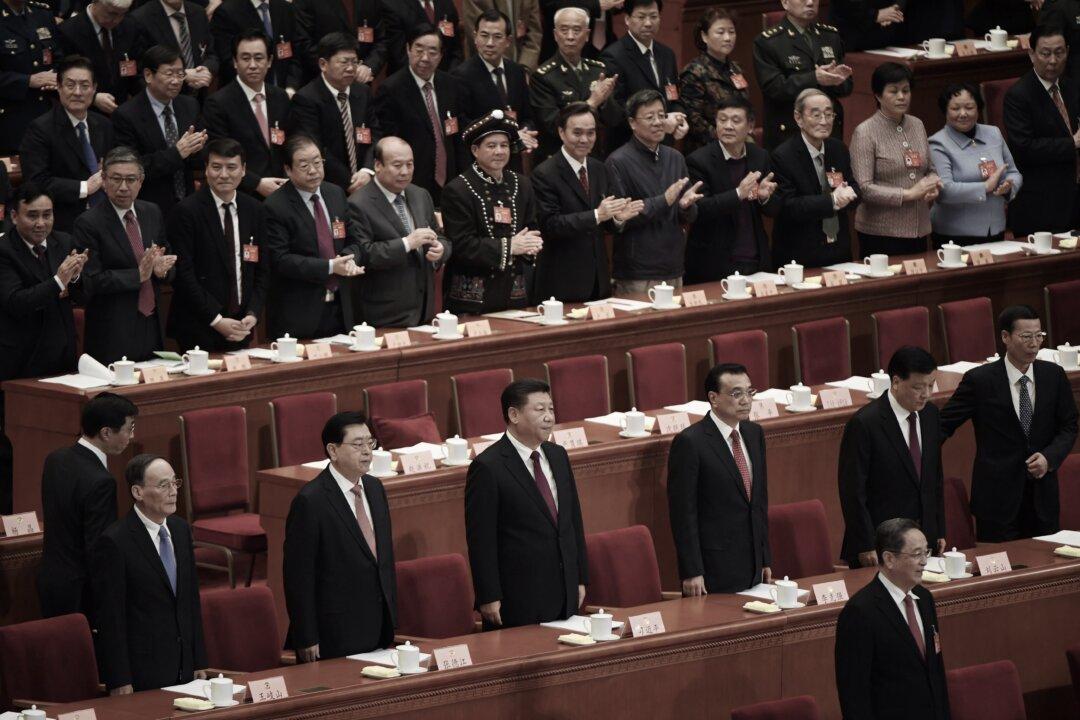
When the top 300-plus Chinese officials gather in an undisclosed location in Beijing for a secretive “all-hands” meeting from Oct. 24 to Oct. 27, Xi is expected to pass regulations that govern the conduct of top leaders—a move that will in time bring to heel a rival political faction helmed by former Party leader Jiang Zemin.
The appearance of unruffled administration in recent years is deceptive. Before Chinese leader Xi Jinping was appointed General Secretary, a would-be Chinese defector told U.S. officials in China of a serious struggle for the Party’s leadership, according to a well-connected American national security reporter. Xi seemed to allude to an attempted coup when he accused purged elite officials of forming “cliques and cabals” to “wreck and split” the Party in a 2015 speech.
If Xi feels really confident and assured, he might also assume the mantle of the Party’s “core,” or “hexin” in Chinese—a symbolic gesture aimed at shifting the Party away from the previous “core” leader Jiang.

No False Moves
At the end of July, Xi Jinping announced that the “major issue of strictly governing the Party” will be addressed at the 6th Plenum. Elite cadres in the Central Committee, the Politburo, and the Politburo Standing Committee will have to “normalize their political life,” the statement on Party mouthpiece Xinhua read. Two earlier regulations on Party discipline—one drafted in the time of Deng Xiaoping and the other under Hu Jintao’s leadership—are also slated for revision at the plenum.
Xi’s advanced warning is unusual because the agenda for Party plenums are typically set between 10 to 14 days before they commence. In hindsight, Xi appears to have used the three-month lead up to the 6th Plenum to mount a major offensive, in the Party’s coded manner, against Jiang Zemin and his key allies in the powerful Politburo Standing Committee, Zhang Gaoli, Zhang Dejiang (no relation to Zhang Gaoli), and Liu Yunshan.
First to be put on notice was Chinese vice premier Zhang Gaoli. In mid-September, Tianjin acting Party Secretary Huang Xingguo and deputy mayor Yin Hailin were purged. Because both men owed their promotions to Zhang when he was Tianjin chief, an investigation into their misdeeds could implicate their political patron.
But bearing the brunt of Xi’s offensive is Zhang Dejiang, the head of the regime’s rubber stamp legislature and the top Chinese official overseeing semi-autonomous Hong Kong.
September saw the unprecedented mass sacking of legislators from the northeastern province of Liaoning for vote buying; a clear stain on Zhang. Weeks later, the pro-Beijing Hong Kong newspaper Sing Pao Daily launched a sustained attack of Zhang through very critical commentaries and cartoons on its front page. Sing Pao’s unusual audacity and the fact that an official publication by the regime’s anti-corruption agency approvingly cited the newspaper in a report has led observers to believe that Sing Pao has the blessings of the Xi Jinping camp.