Ottawa spent $71.1 billion on wages and other employee-related expenses in its most recent fiscal year, marking the largest portion of the government’s operational spending, according to new estimates from Canada’s budget watchdog.
The 2024–25 expenditure represents an increase of $1.5 billion from the $69.6 billion allocated for personnel in the previous fiscal year, even with the public service reducing its workforce by approximately 10,000 positions, a report from Canada’s parliamentary budget officer (PBO) said.
The report predicts staffing costs will rise to $76.2 billion by 2029–30 if there is no change in expenditures. Federal spending on personnel is projected to cumulatively raise the deficit by $8.5 billion over the next five years, averaging $1.7 billion annually.
This figure represents a 2 percent increase compared to the estimate provided by the budget oversight agency in March when the PBO used different data for its estimates.
The report released on Aug. 28 incorporates a new calculation approach by incorporating either monthly or quarterly staffing data directly from federal pay systems rather than relying on annual department figures, the PBO said.
“Overall, these enhancements will provide a more robust, timely, and comprehensive projection of federal personnel,” the agency said in its report. “This will not only improve the accuracy of our main fiscal projection but also deepen our understanding of the key drivers behind federal personnel spending.”

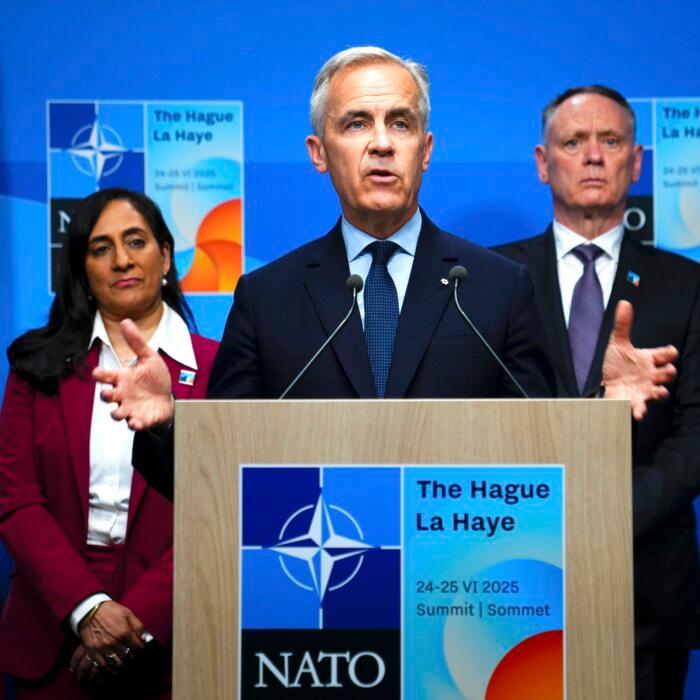
The agency noted, however, that its latest report is based on numbers obtained in May and does not include federal announcements made since, including salary increases for members of the Canadian Armed Forces and potential impacts from the recently launched review of government spending.
Finance Minister François-Philippe Champagne dispatched letters to cabinet members at the request of Prime Minister Mark Carney in July, urging them to present “ambitious savings proposals” aimed at achieving a 7.5 percent reduction in operational spending for the fiscal year 2026–27, with subsequent cuts of 10 percent the following year, and 15 percent in 2028–29.
Employee Projections
The federal public service experienced a decrease of 9,807 members between 2024 and 2025, according to Treasury Board Secretariat data.Meanwhile, a July PBO report said Ottawa is expecting an increase of more than 13,000 full-time equivalents compared to last year. A full-time equivalent is a metric Ottawa uses to represent the work of a single full-time employee or the combined efforts of multiple part-time employees whose work totals one full-time position.
The PBO’s latest report indicated the number of FTEs will rise to nearly 442,000 by 2030.
The projected average expenses for full-time equivalents, which is primarily influenced by salaries, wages, and other typical compensation, is anticipated to rise to $139,400 by the fiscal year 2029–30. The average cost increases to more than $172,000 when factoring in pensions and additional benefits.
The PBO has said that number could change after military salary increases and anticipated federal department cuts are factored in.
The Canadian Taxpayers Federation (CTF) is calling on Ottawa to shrink the federal bureaucracy in light of the PBO’s predictions.
“Taxpayers already pay too much for the bloated federal bureaucracy and this report shows those costs will continue to balloon unless the government finally cuts spending,” CTF federal director Franco Terrazzano said in a statement on Aug. 28. “Canadians need meaningful tax relief and the only way for Carney to make that happen without hiking the debt is to cut the size and cost of the bureaucracy.”
Carney promised during the spring election campaign to “rein in” government spending and cut the size of the federal public service through the current spending review while also leveraging AI to enhance efficiencies.
“The essence of this is to spend less and invest more,” Carney said at the time. “That means reining in government spending so that Canada can invest more as a country.”