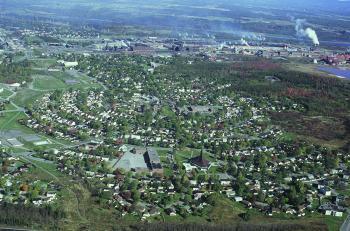
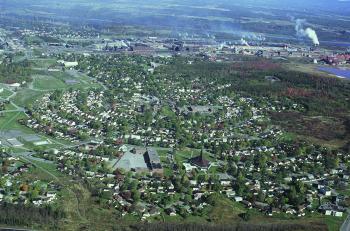
A carefully planned company town in Quebec built by a fiery American industrialist as a “utopia” for the working man is being put forward for recognition as a UNESCO World Heritage Site.
Arvida was built in 1927 by Alcoa (Alcan in Canada) and its president, Massachusetts-born Arthur Vining Davis, who was the driving force behind creating a model metropolis that became home to the largest aluminum smelter in the world.
Located 240 km north of Quebec City, Arvida was known as “the City Built in 135 Days” and in its heyday had 14,000 residents. It was lauded by The New York Times as a “model town for working families” on “a North Canada steppe.”
“Arvida is an industrial town planned around an integrated aluminum smelter that became in a few years the most important one in the world,” says Carl Dufour, a local city councillor who is spearheading the effort to get Arvida on the World Heritage list.
Arvida was built in 1927 by Alcoa (Alcan in Canada) and its president, Massachusetts-born Arthur Vining Davis, who was the driving force behind creating a model metropolis that became home to the largest aluminum smelter in the world.
Located 240 km north of Quebec City, Arvida was known as “the City Built in 135 Days” and in its heyday had 14,000 residents. It was lauded by The New York Times as a “model town for working families” on “a North Canada steppe.”
“Arvida is an industrial town planned around an integrated aluminum smelter that became in a few years the most important one in the world,” says Carl Dufour, a local city councillor who is spearheading the effort to get Arvida on the World Heritage list.