WASHINGTON D.C.—After the fall of communism in Eastern Europe and the former Soviet Union, hopes ran high that the wave of the future would be democracies, market economies and respect for human rights.
But these expectations have not come to fruition. During the first decade of the twenty-first century, human rights and democracy in many countries have been thwarted by a new form of authoritarianism, with methods of control significantly more sophisticated than used by totalitarian regimes in the past, according to a new report.
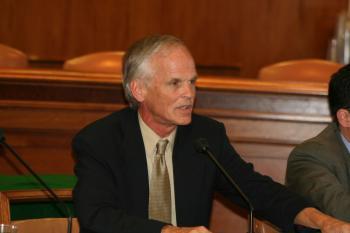
This report, “Undermining Democracy: 21st Century Authoritarians,” was released on Capitol Hill, June 4, which was the 20th anniversary of the 1989 Tiananmen Square massacre.
The 80-page document finds that four authoritarian states—China, Russia, Iran, and Venezuela—are setting forth a new authoritarian model for countries to follow, and they have the resources and sophistication to be highly influential in the developing countries of Africa, Asia and Latin America.
Freedom House, Radio Free Europe/Radio Liberty, and Radio Free Asia sponsored the report. With missions to promote democracy and freedom, the three organizations conducted a study of the “methods these regimes are employing, both within and beyond their borders, to impede human rights and democratic development.”
Pakistan is also included in the report because of its geopolitical importance and because its democratic institutions are very weak, enabling extremism to flourish in parts of the country and in Afghanistan. Pakistan does not actively promote anti-democratic policies like the other four, according to the report.
Pakistan and Venezuela are rated “partly free” by Freedom House’s highly respected metrics that rate the countries in the world on freedom of expression and religion, rule of law, democratic institutions and other criteria.
The leading authoritarian regimes are claiming to be “democracies,” and twisting its meaning to confuse their citizens. Putin’s Russia employ’s the curious term “sovereign democracy,” which conjures up images of national renewal, nostalgia for Russian power and respect, and anti-Western xenophobia.
The Kremlin controls all national television stations and many newspapers and internet platforms, and thus controls most important news media, states the report. Journalists who investigate corruption or human rights abuses face physical violence and even murder.
The Chinese Communist Party (CCP) usurps the term democracy, despite that the state is ruled by a one-party system, whose members are not elected by the people, and there are no institutional checks on the Party’s absolute power. Nevertheless, Communist Party chief, “President” Hu Jintao, invoked the word 60 times in his report to the 17th Party Congress.
Iran’s clerical oligarchy claims to be an “Islamic’ democracy” in which the interests of the underclass are protected by a leadership possessing divine insight, says the report. The regime controls all domestic broadcast media and most of the press, interferes with foreign media broadcasts, and jails online dissidents.
But these expectations have not come to fruition. During the first decade of the twenty-first century, human rights and democracy in many countries have been thwarted by a new form of authoritarianism, with methods of control significantly more sophisticated than used by totalitarian regimes in the past, according to a new report.
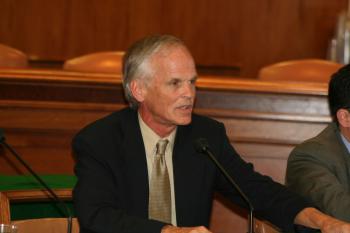
This report, “Undermining Democracy: 21st Century Authoritarians,” was released on Capitol Hill, June 4, which was the 20th anniversary of the 1989 Tiananmen Square massacre.
The 80-page document finds that four authoritarian states—China, Russia, Iran, and Venezuela—are setting forth a new authoritarian model for countries to follow, and they have the resources and sophistication to be highly influential in the developing countries of Africa, Asia and Latin America.
Freedom House, Radio Free Europe/Radio Liberty, and Radio Free Asia sponsored the report. With missions to promote democracy and freedom, the three organizations conducted a study of the “methods these regimes are employing, both within and beyond their borders, to impede human rights and democratic development.”
Pakistan is also included in the report because of its geopolitical importance and because its democratic institutions are very weak, enabling extremism to flourish in parts of the country and in Afghanistan. Pakistan does not actively promote anti-democratic policies like the other four, according to the report.
Pakistan and Venezuela are rated “partly free” by Freedom House’s highly respected metrics that rate the countries in the world on freedom of expression and religion, rule of law, democratic institutions and other criteria.
Meaning of democracy twisted
The leading authoritarian regimes are claiming to be “democracies,” and twisting its meaning to confuse their citizens. Putin’s Russia employ’s the curious term “sovereign democracy,” which conjures up images of national renewal, nostalgia for Russian power and respect, and anti-Western xenophobia.
The Kremlin controls all national television stations and many newspapers and internet platforms, and thus controls most important news media, states the report. Journalists who investigate corruption or human rights abuses face physical violence and even murder.
The Chinese Communist Party (CCP) usurps the term democracy, despite that the state is ruled by a one-party system, whose members are not elected by the people, and there are no institutional checks on the Party’s absolute power. Nevertheless, Communist Party chief, “President” Hu Jintao, invoked the word 60 times in his report to the 17th Party Congress.
Iran’s clerical oligarchy claims to be an “Islamic’ democracy” in which the interests of the underclass are protected by a leadership possessing divine insight, says the report. The regime controls all domestic broadcast media and most of the press, interferes with foreign media broadcasts, and jails online dissidents.