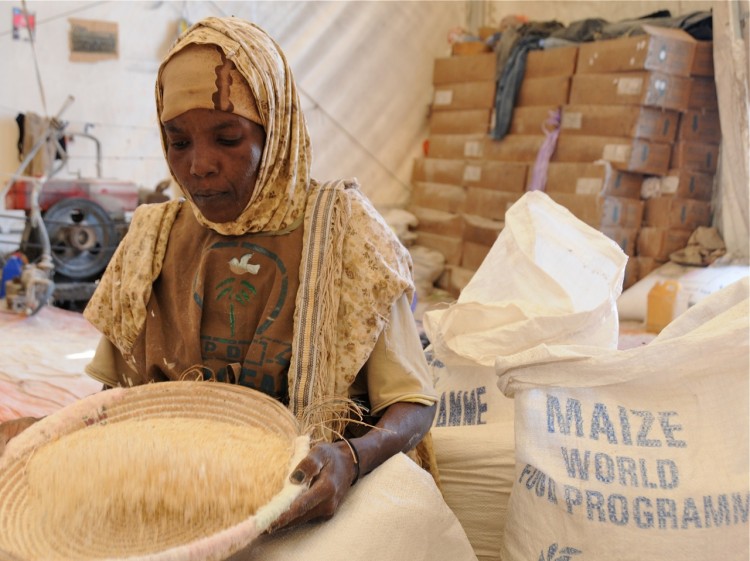
Somalia—a country suffering from two decades of civil war, no central government, and the scourge of piracy—has also become the emblem of overwhelming hunger, complete with images of malnourished children with sad eyes and bulging bellies.
Earlier this month, the United Nations deemed the Somali famine that had first been declared last July, over. The famine claimed between 50,000 and 100,000 lives, half of them children.
Due to a massive humanitarian injection of funds and supplies and favorable weather forecasts, the situation has improved—but not excessively.
According to the Food and Agriculture Organization, out of the 4 million people facing starvation at the start of the famine, there are now 2.51 million. Nonetheless, Somalia still has 31 percent of its population—more than any other country in the world—who require humanitarian assistance, at least until June, when the next harvest is expected, assuming healthy rains in April and May.
Humanitarian aid will also be critical during April and May, known as the hunger gap—or the period between harvests. During this time, cereals stocks will become depleted in poorer households in the regions of Bay and Lower Shabelle.
Somalis are even more vulnerable to political instability, which could toss the country into catastrophe again, regardless of the bounty of the harvest.
Food insecurity elements are terrorist organization al-Shabab, escalating military conflicts with Kenya and Ethiopia, and thousands of internally displaced fleeing for their lives. Experts warn that without commitment of the relief organizations and political actors and generous support from donors, the current crisis has all chances to revert to catastrophe again.