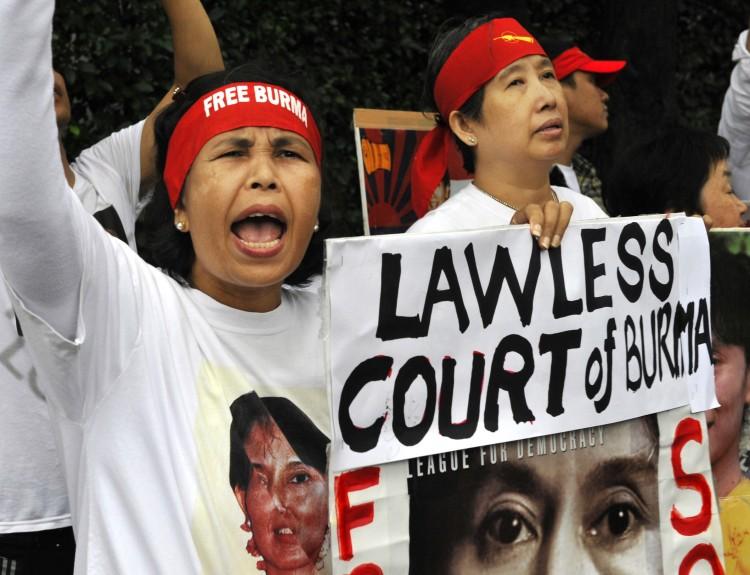
Despite the seemingly dramatic pace of reform in Burma—starting with the release of opposition leader Aung San Suu Kyi in November 2010, up to multiparty by-elections last April—Burmese lawyers say they’ve seen little substantive change so far and still doubt the sincerity of the nation’s transition to democracy.
“Make no mistake: We remain suspicious of the motives behind recent reforms and continue to criticize the process by which the current government took power,” says U Thein Oo, chairperson of the Burma Lawyers’ Council (BLC), in a statement last week.
BLC is an independent organization that operates in exile out of Thailand. For years the organization has condemned the imprisonment of political prisoners and the military’s abuse of the judicial system in Burma (also known as Myanmar).
Established in 1994, BLC was declared unlawful by the military junta in Burma in 2009, for being “hurtful to the rule of law in the Union of Myanmar, stability of the state, and community peace.”
In a phone interview from Bangkok, Thein Oo reported that there are more than 30,000 lawyers working in Burma, yet they cannot practice their profession freely.
“In Burma, lawyers are afraid for their daily life. Thousands have had their licenses revoked.”
Thein Oo explained that lawyers in Burma are treated as criminals by judicial authorities. For example, if a lawyer takes a case defending the rights of a farmer or a worker, the court might find his complaint offensive to the authorities, sue the lawyer, and take away his license.