VICTORIA—It was made famous around the world by the TV series “The Beachcombers,” but beachcombing has been a British Columbia institution almost since logging began on the B.C. coast in the late 1880s.
These days, however, many beachcombers—those who salvage stray logs that have escaped from the log booms of the forest companies—are getting out of the business, mainly because it just doesn’t pay enough.
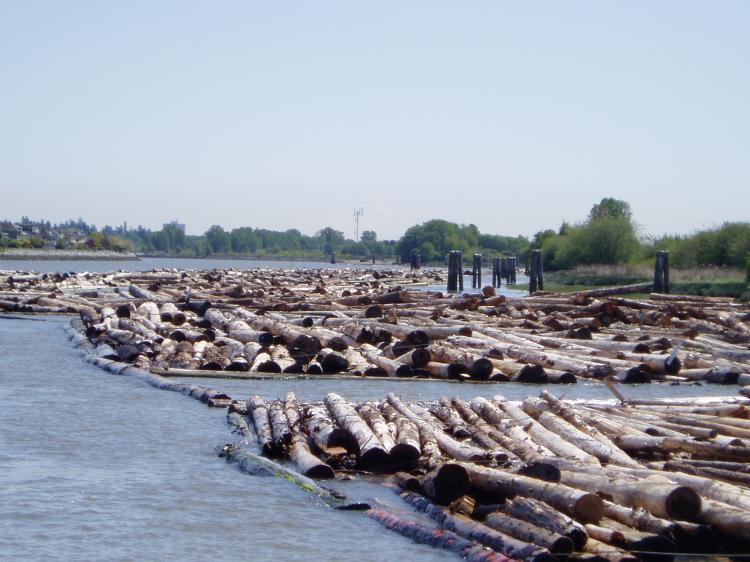
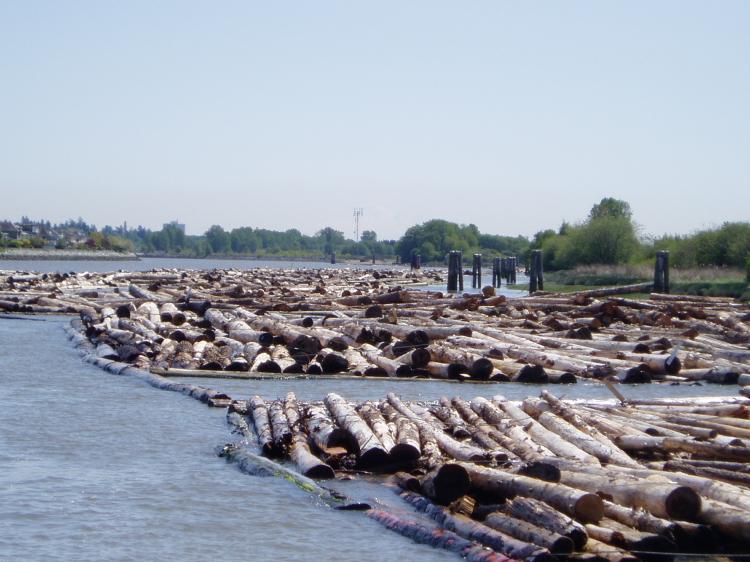
Meanwhile, thousands of cubic metres of stray logs are clogging and crushing marshes in the Fraser River estuary, severely damaging bird habitat and impacting salmon, millions of which migrate down the river each year on their way out to sea.
Under provincial regulations, beachcombers can only return salvaged logs to a “licenced receiving station.” Since there is only one such facility, Gulf Log Salvage Co-operative Association, beachcombers complain that the lack of competition has led to a situation in which they don’t get a fair price for the wood.
As a result, beachcombers are leaving many logs to drift for the simple reason that they would lose money by picking them up. The price of salvaged logs is graded, with some being worth more than others.
“The incentive for us to do it is really not there any more because [Gulf Log] has been paying us an artificially low price and this makes it very unviable economically to recover a lot of the wood,” says long-time beachcomber Norbert Kaysser.
The problem, says Kaysser, is that Gulf Log, which is run by the forest industry and marine insurance companies, has focused on recovering lost logs “at the lowest possible price,” paying a small fee rather than the market value of the wood.
“In many instances, many of us are getting nothing or next to nothing for logs that are a valuable commodity. And it’s not necessarily the lower grade logs that we get paid almost nothing for, it’s quite often very higher grade logs, but we get almost nothing because of the pay structure. It’s absolutely incredible if you really understand what is going on.”
A request for an interview with Gulf Log was refused. On its website, the company says salvaged logs are generally of lower value than fresh green timber, mainly because some mills refuse salvaged logs. The mills are worried about hitting metal that may be stuck in them, or the logs can be damaged by insects or impregnated with sand.
The fact that the forest industry is currently experiencing the worst timber market in decades is not helping matters. But Kaysser is one of the lucky ones. He’s been in the game for 38 years, his boat is paid for, and he has established “very good contacts in the industry.”
“Still, even for me it’s very difficult right now,” he says. “But for someone who might be interested to start out in this business like I did all those years ago, they would have absolutely no chance.”
There is also a cost to retrieving stray logs: $250 per year to renew the necessary permit, a yearly criminal record check costing about $50, and sorting fees of $8.50 per cubic metre of salvaged wood. On top of that there’s fuel and costly boat maintenance.
“We’re providing a service and yet we have to pay the sorting costs out of our share of the proceeds which is very unfair because there are many grades and types of logs that we lose money on. Gulf Log would actually charge us if we brought them there because the sorting fees are more than we would get for them. So some of the logs—it doesn’t pay us to even pick them up,” Kaysser says.